June 12, 2013

How Almost Everyone—Particularly Viewers and Theater Lovers—Came Away A Winner From this Year’s Tony Awards Ceremony

The question is the same every year:  should the Tony Awards be a celebration for Broadway insiders and their fellow travelers (like me) or should the televised ceremony be basically a commercial that sells the currently-running productions to regular folks who just want to know which shows to see? Well, the wonderful thing about this year’s telecast is that it was both.

Almost everyone agrees that the show was one of the best in the Tony’s 67-year history. As the Los Angeles Times said, “If anything could restore faith in the American theater it was Sunday's exuberant Tony Awards ceremony at Radio City Music Hall.”

And the ratings bear that out. They were up an astonishing 20% over last year. Which is impressive in its own right but even more so when you consider that the show was up against Game 2 of the NBA Finals and the finale of HBO’s “Game of Thrones.”

Much of the credit for the ratings boost—and the terrific show—has to go to Neil Patrick Harris, the best host of any awards show since Bob Hope in his heyday as the go-to MC for the Oscars in the 1950s and ‘60s.   

I’m sure CBS loves having Harris do the Tony honors because of the synergy with its hit sitcom “How I Met Your Mother.”  But we theatergoers revere NPH because he’s as smitten with the theater as we are. Plus he can sing, dance and tell jokes as well as most of the nominees.

The opening number of any awards show is tricky cause it has to grab the attention of the viewers at home and entertain folks in the live audience who mainly want to just get on with the trophy giving.  That first number also sets the tone for the rest of the show to come. 
 
Harris and his collaborators (a special shout out to director Glenn Weiss for getting the cameras where they should be) aced it on all accounts. The opener was a terrific mashup that gave every musical now playing on Broadway a chance to strut its stuff (click here to see the result). And everyone involved—particularly NPH—looked to be having so much fun that who wouldn’t want to join the party? 
 
And the team kept things bouncing along, despite a couple of rambling acceptance speeches.  Most, however, were gracious and heartfelt and you can hear them all by clicking here. 
 
The show finished with a great riff on Jay-Z’s “Empire State of Mind,” in which Audra McDonald took over the Alicia Keys accompanying role, while Harris summed up the evening with hip-hop lyrics that Lin-Manuel Miranda and Thomas Kail wrote as the show was unfolding. 

Alas, some viewers around the country didn’t get to see it because the show ran over by four minutes and their numbskull stations switched away. But you can see the whole thing by clicking here.  

Now I’ll admit that I may be biased because the Tonys have always been my favorite awards show of the year.  It's an event that gets the Super Bowl treatment in my house. 

I fix a dinner that my husband K and I can eat on TV trays (this year’s menu: Teriyaki chicken legs, asparagus and cannellini bean salad in a lemon-and-tarragon vinaigrette and a bottle of rosé) and then we turn off the phone and settle ourselves in front of the set and root for our favorites.

I keep score of the wins.  K keeps the wine glasses filled. Yelling out loud and high-fiving are allowed.  A former pit musician, K actually got up and gave a standing O when Hal Prince, on hand to mark the 25-year run of Phantom of the Opera, cited his pride in having a full orchestra of 28 musicians for the show.  
  
There were lots of other things to cheer as well.  Four of the eight acting awards went to African-Americans (Patina Miller for Pippin, Billy Porter for Kinky Boots, Courtney Vance for Lucky Guy, and the great Cicely Tyson for The Trip to Bountiful).  And the two directing awards went to women (Pam MacKinnon for Who's Afraid of Virginia Woolf?, Diane Paulus for Pippin).  In fact I’ve no complaints about the winners, even when my personal favorites failed to take home the prize. (Click here for the full list.)

 And even shows that walked away with no awards could claim some victory:  I’ve seen several bloggers and website commenters talking about how the production number from Rodgers + Hammerstein’s Cinderella prompted them to buy tickets for that show. 
 
Like most theater lovers, my buddy Bill and I were eager to hash over the show and so we decided to do another of our occasional recorded discussions to share some of what we thought with you.  Click the orange button below to hear us sound off on our favorite moments from the telecast:


June 8, 2013

Highs and Lows of the Season’s Biggest Shows

Off-Broadway shows usually come and go more quickly than big main-stem Broadway productions (unless those productions are duds or feature big Hollywood stars who sign up for limited runs or are both) and so I try to write about the little shows before they disappear. But that means I sometimes fall behind with the more high profile ones. Which is the predicament in which I now find myself. The Tonys are tomorrow night and there are at least half a dozen big—and nominated—shows that I’ve yet to weigh in on.

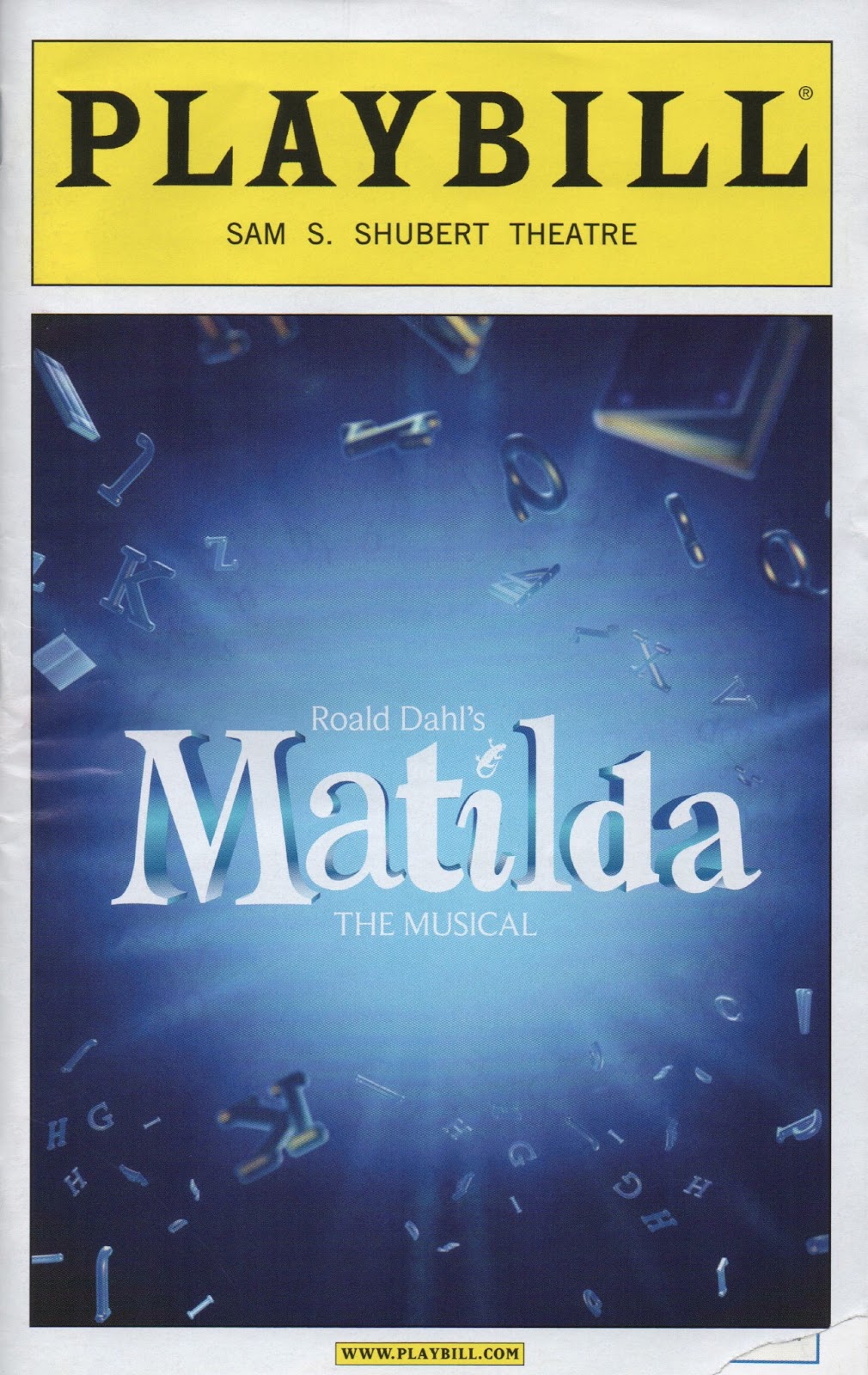
Some of them include Pippin, which has gotten 10 nominations, and is the frontrunner for Best Revival of a Musical; Matilda, the critical darling that is running neck and neck with Kinky Boots (click here for the review I did manage to do on that one) for Best Musical and The Nance, the play that has given the much beloved and multi-talented Nathan Lane the chance to make audiences both laugh and cry with one singular performance.
 
I’m not going to try to handicap the winners (there are plenty of other folks doing that; click here and here and here to read some of them). But below is my quick rundown of the highlights and lowlights of six of tomorrow night’s big contenders:
 
THE ASSEMBLED PARTIES. Playwright Richard Greenberg’s family drama hits all the sweet spots for New York theatergoers:  it’s about an affluent Jewish clan that likes to eat well and lives in a 14-room apartment on the Upper West Side.
 
Highlight: The performances, lead by Jessica Hecht, Judith Light and Jeremy Shamos, are warm and winning. And the gorgeous—room-flowing-into-room—set that Santo Loquasto has designed really is to die for.
 
Lowlight: The show’s message about how we define family isn’t as deep as it wants to be and its conclusion that friends with money are the best kind to have isn’t as admirable as I’d like it to be.
 
Tony Spotlight:  The Assembled Parties has three nominations, including for Best Play, Judith Light for Best Performance by an Actress in a Featured Role in a Play and Loquasto for the set, which I hope he gets.  

MATILDA. The Brits loved this musical adaptation of Roald Dahl’s sly children’s book about a very smart little girl who has to contend with very dumb parents and a malevolent schoolmistress. And the show has also received the best reviews of the New York spring season.
 
Highlight: The kids in the ensemble who play Matilda’s schoolmates are fantastic and totally ace Peter Darling’s ingeniously original choreography. Plus Gabriel Ebert, who gave a breakout performance as the troubled grandson in Amy Herzog’s 4000 Miles, is a hoot as Matilda’s dad and is now heir apparent to the rubbery-limbed funnyman roles once played by the likes of Ray Bolger and Dick Van Dyke.
 
Lowlight:  The sound is so muddy that it’s difficult to understand the lyrics. Meanwhile, although the set is great to look at, it’s been breaking down even weeks into the run and stopping the show until the machinery gets fixed. And while Bertie Carvel gives a fully committed performance as the gorgon headmistress, it also strikes me as a bit one-note.
 
Tony Spotlight: The show picked up 12 nominations, winning nods in all the categories for which it was eligible, except for sound design and Best Performance by an Actress in a Leading Role in a Musical. The latter omission is because a quartet of young actresses alternates the title role of Matilda and rather than pit them against one another, they were taken out of the running for the best actress prize and all four have been given a special award by the Tony committee. 

MOTOWN: Berry Gordy both produced and wrote this jukebox musical about the legendary music label he founded over 50 years ago.

Highlight: D’uh.  The great Motown songbook is the draw here. And it's performed by an energetic cast that gamely mimics the look and sound of such acts as The Temptations, Smokey Robinson & the Miracles, little Michael Jackson and, of course, Diana Ross & The Supremes (click here to read a piece I wrote for TDF Stages about the casting process).   
 
Lowlight:  The book, which gives new meaning to the word hagiography.
 
Tony Spotlight: Motown got shut out of the Best Musical category and only managed to nab four other nominations, including best featured actor nods for Valisia LeKae as Diana Ross and Charl Brown as Smokey Robinson, but this musical is already a big winner at the box office and a featured production number from this crowd pleaser could steal the show on tomorrow night’s broadcast as well.
   
THE NANCE: A love story set against the backdrop of Mayor Fiorello LaGuardia’s attempt to wipe out the burlesque world of the late 1930s, Douglas Carter Beane’s play evokes a time when prissy gay characters were a comic staple on New York stages while real-life gay men could be arrested for showing any sign of their sexuality.
 
Highlight: Lane gives a nuanced performance as a professional funny man (his comedic show-within-a-show routines are great) whose inner sadness and self-hatred keep him from the love he longs to have. 

Lowlight: The idea behind this show is great as are the commitment of its star, writer and director Jack O’Brien but I wish Beane had pontificated less and pushed himself to dig even deeper into the complexities of being a gay man in that time.
 
Tony Spotlight: Four of the show’s five nominations were for its design but Lane is definitely in the running in the über competitive category of Best Performance by an Actor in a Leading Role in a Play.  

PIPPIN: This Stephen Schwartz musical about a Medieval prince and his quest for the meaning of life is making its first return to Broadway since the landmark 1972 production that was directed by Bob Fosse and made a star—and  a Tony winner—out of Ben Vereen, who played the leader of a traveling band of actors and the narrator of the tale. 
 
Highlight: Even after all these years, Schwartz’s score is as familiar and enjoyable as it ever was and the show’s hippie-era message that all anyone—prince or commoner—really needs is love is still one we crave to believe. 

Lowlight:  Everyone seems to love director Diane Paulus’ idea to integrate circus performers into the production and their feats are fun to watch but they don’t really connect to the show and struck me as more gratuitous spectacle than inherently theatrical.
 
Tony Spotlight:  Casting Vereen’s old part of the Leading Player as a woman was a gamble but it’s earned Patina Miller her second nomination in as many years. She looks fabulous doing the Fosse-inspired dances that Chet Walker has choreographed for the show but people seem even more excited about the featured role nominations for the stage vets Terrence Mann as Pippin’s dad Charlemagne and Andrea Martin as his literally swinging grandmother Berthe.

 
THE TRIP TO BOUNTIFUL: Horton Foote created a dream role for older actresses when he wrote the character Carrie Watts, a woman who is forced to live in close quarters with her grown son and daughter-in-law while yearning for one final visit to her childhood home. And director Michael Wilson has crafted a beautiful production in which the drama's major roles are played by African-American actors lead by Cicely Tyson as Carrie. 
 
Highlight:  No black actress has had a more successful career than Tyson, who turns 80 in December. And now she's giving the best and most unaffected performance she’s ever done.
 
Lowlight: Not much to complain about here. Except possibly that Vanessa Williams is a touch too cartoonish and maybe even too beautiful (although what can she do about that?) in the role of the shrewish daughter-in-law.  

Tony Spotlight: The play marks Tyson’s first time on Broadway in 30 years and she's a frontrunner for Best Performance by an Actress in a Leading Role in a Play. The show also brings  the second nomination in a row for Condola Rashad who plays a young woman who befriends Carrie. Watching the scenes between the two of them is pure joy.


June 5, 2013

“Far From Heaven” is Too Aloof To Love


Nostalgia for the 1950s, the childhood years of the baby boomers, will probably hold strong as long as the boomers do.  But, as the TV series “Mad Men” has shown, ruminations about those days work best when tempered with a sharp awareness of the coming events—civil rights, feminism, gender equailty—that will eventually break open that circumscribed world. Far From Heaven, which opened at Playwrights Horizons on Sunday, beautifully evokes the look and sound of that era but it lacks that requisite ironic edge and ends up as emotionally repressed as the time in which it is set.

And I can’t tell you how much that disappoints me.  The 2002 movie on which this new musical is based, is one of my all-time favorites. Indie filmmaker Todd Haynes paid loving homage to Hollywood director Douglas Sirk, who specialized in big, romantic melodramas that usually centered around women quietly frustrated by the proprieties of midcentury society.
 
Haynes' film maintained Sirk’s aesthetics—super-saturated colors and a lush musical score—but updated the storylines to deal head-on with the once-taboo subjects of homosexuality and racism. 

In both his movie and the musical, Cathy, an affluent white housewife discovers that her husband is a closeted gay man and finds solace in a relationship with her African-American gardener, both scandalously unacceptable behaviors in her country-club world.

The pain caused by the constraints of the Eisenhower era moved me. And the material—right down to the comic relief provided by Cathy’s wry best friend—seemed ready-made for a similarly affective musical.   

So I kicked myself when I failed to get up to the Williamstown Theatre Festival when Far From Heaven debuted there last summer. And when I read that Playwrights Horizons planned to mount the play this spring, I subscribed for its entire season just so that I would be sure to get tickets.  
 
Good thing I did that, too, because the entire run for Far From Heaven sold out (as in no tickets available) even before previews began. And extensions are unlikely because, as is widely known and plain to see despite Catherine Zuber’s cleverly designed outfits, the show’s star Kelli O’Hara is pregnant and already showing; a rounder belly would undermine the believability of a woman who can’t get her husband to sleep with her. 

There’s plenty else about the show to like beyond Zuber’s gorgeous dresses. But every good element seems to require a caveat. 
 
As a fan of the movie, I appreciate that playwright Richard Greenberg, who had three shows open this season (this one plus the ill-fated Breakfast at Tiffany's and the more successful The Assembled Parties) has written a book that is so set-piece-by-set-piece faithful to the film. 

But Greenberg has taken the material so seriously that much of the life has been leached out of it. The show might have had more theatrical vitality if he’d been less reverential.  

Meanwhile, director Michael Greif, the man behind such emotionally satisfying musicals as Grey Gardens, Next to Normal and Rent, has given the show a cinematic feel with the use of scene-setting video projections that play against an ERECTOR-style set designed by Allen Moyer. 

But despite helpful lighting by Kenneth Posner, the interplay between the actors is often overshadowed and seems removed, which only underscored the show’s aloofness.
 
The score is by composer Scott Frankel and lyricist Michael Korie, the award-wining duo who wrote Grey Gardens, and it echoes the big sweeping melodies that defined the romantic movies of the post-war era. (Click here to read about how they put the score together). 

But while the songs are pretty and unafraid of metaphors, this is largely a sung-through show and it can be difficult to understand all of the lyrics, at least on first hearing. 
 
However, I have no reservations when it comes to the performances. O’Hara is radiant as Cathy; there’s always been a Grace Kelly quality about her and it works wonderfully here. 

Also good are Steven Pasquale as her anguished husband Frank and relative newcomer Isaiah Johnson as the gardener Raymond, a sensitive and well-educated man struggling to find his own space during America's apartheid years  (click here to hear an audio interview with Johnson). 

The rest of the 15-member ensemble is strong too, particularly Nancy Anderson as Cathy's best friend and Quincy Tyler Bernstine, who brings knowing empathy to the small and almost silent role of the family's maid.
 
And yet, the whole is less than the sum of its parts.  Both my husband K and I walked out of the theater totally unmoved by what we'd seen.  And that’s too far away from heaven for any show to be.


June 1, 2013

“Basilica” is Blessed with a Young Guardian Angel—and One Terrific Performance


Anyone with even the slightest awareness of the young pop star Justin Bieber and his recent antics knows that the mix of celebrity and adolescence can be a toxic combination.  So it’s very nice to report that the young actor Jake Cannavale has put his celebrity to good use by making his stage debut in the new play Basilica, which is running in a Rattlestick Playwrights Theatre production at the Cherry Lane Theatre through June 22.

Cannavale may not yet have Bieber’s star wattage but he is the son of actor Bobby Cannavale and the screenwriter Jenny Lumet, the grandson of the film director Sidney Lumet and the great-grandson of the legendary performer Lena Horne. And, to be honest, it’s unlikely that I would have gone to see Basilica if he hadn’t been it. 
 
Now I’m glad I did see it because as imperfect a play as Basilica is, both its playwright Mando Alvarado and this production, sensitively directed by Jerry Ruiz, deserve attention. 

You may have noticed that both those names are Hispanic. And if you know even a little about theater in New York, you know that Hispanic playwrights, directors and even actors are woefully underrepresented on our main-stem stages. 

The fact that Jake Cannavale, who can claim Italian, Jewish, Cuban and African-American roots, would choose to make his maiden performance with this least theatrically represented of groups says a lot about him.
 
Basilica centers around a Mexican-American family living in a small Texas border town. The father Joe used to be a high-school football star but dropped out when Lela, the girl he loved—and still adores—got pregnant. 

By the time the play begins, the now-married couple have settled into a working-class life that revolves around trying to keep their jobs in a shaky economy, maintaining their faith by attending mass at the local titular church and raising their two teen kids, Ray and Jessica.  

The family’s routine is upset when a new priest, who grew up in the town but moved on to a grander life, arrives to head the basilica. All kinds of hell break loose and the play spins into melodrama.  

That latter statement isn’t entirely meant as a putdown.  I don’t mind being manipulated by a play—as long as the maneuvering is skillfully done. Alvarado clearly has affection for his characters and he writes dialog that is both real and engaging. And he has some important things to say about love, faith and family.
 
He isn’t, however, as deft at plot development.  You can see some twists coming from a mile away. While other events come out of nowhere and throw everything around them off-kilter. A would-be humorous subplot about Jessica’s flirtations with a variety of religions meanders as well.
 
Still, there’s some terrific acting in Basilica, most of it coming from Felix Solis, who brings such unaffected likability to Joe that the end of the play packs a surprising punch, despite the contrivances that get us there. 
 
And what of Cannavale?  Well, although he’s only 17 and is just finishing his senior year in high school, he’s chosen wisely for his stage debut: Ray, who agonizes over not being more like his father, is a central character in the play but the role is relatively small. 

It also helps that some of the young actor’s awkwardness dovetails with the character’s. But all that aside, Cannavale has a natural stage presence and, as my stepdaughter whispered when he made his first appearance, is just as cute as his dad. 

The young Cannavale made an equally impressive debut with his featured role last season as a troubled teen on Edie Falco’s TV series “Nurse Jackie,” but his Playbill bio says he’s headed to Emerson College in the fall.  His performance in Basilica suggests that, when he graduates, he should return to the stage.

May 29, 2013

A Farewell to—and Final Lament for—"Smash"


“Smash,” which ended its two-season run on NBC this past Sunday night, was like that friend you’re embarrassed by and are always thinking you should drop because she just doesn’t know how to behave herself. And yet, when she packs up and leaves town for good, you can’t help mourning the loss. 
 
There have already been legions of eulogies for the show (click here to read executive producer Marc Shaiman’s) and about what its failure will mean for any future shows that try to put stories about Broadway on TV. So I hesitated about adding to the pile. But “Smash” was my wayward friend too and so I’ve decided to have my little say. 
 
I had held back from sounding off about the show after my lukewarm—but hopeful—review of its pilot episode back in February, 2012 (click here to read that). I just didn’t want to join the ranks of the hate watchers who could hardly wait for an episode to end before badmouthing it.  
 
Even before the second season began with a new head producer brought in from the successful show “Gossip Girl,” new story lines aimed at a younger audience and new stars like Jeremy Jordan to play those parts, naysayers were performing autopsies on the show (click here for a detailed analysis of what went wrong with the first season). 

One week, the popular A.V. Club entertainment site gave the show an F for “The Phenomenon” episode in which the series regulars dealt with the sudden death of the character Kyle, the co-writer of “Hit List," the show’s Rent-like show-within-a-show musical. It was bad but not bad enough to deserve an F.

Even while sighing my way through some of “Smash’s" most exasperating episodes, I got a kick out of seeing familiar Broadway faces (“look, there’s casting director Bernie Telsey”) and places (“they’re sitting right next to the table we had at Bond 45”).  But at the same time, I knew that most viewers wouldn’t have a clue about any of those inside references. 
 
And I think that may have been the main problem with the show: its creative team never figured out how to please the general viewers who don’t care about Broadway or the world of New York theater while still satisfying us theater geeks who care about it too much. 
 
The standard soap-opera stuff that might have attracted a wider audience never got fully developed. Flirtations started up and quickly fizzled out. Problems popped up and were instantly resolved. When characters no longer served the shaky plot, they were just tossed aside.

Meanwhile, the process of putting together a musical that we geeks craved to see was etched in such ridiculously broad strokes that those scenes made the old Judy Garland-Mickey Rooney let’s-put-on-a-show movies seem like “Frontline” documentaries.

The handwriting appeared on the wall when news leaked in March, a full six weeks before NBC officially canceled “Smash,” that Debra Messing, who portrayed one-half of the show’s main songwriting team, was doing a pilot for a CBS sitcom. 
 
Messing, of course, knows from her days on “Will & Grace” what it feels like to be in a hit series. And so her dismay with “Smash” was understandable as it jerked around her character Julia—making her a clueless writer one minute and a brilliant one the next, having her trying to adopt a baby from China while cheating on her husband.

“Smash” was originally conceived as a cable show. But its big fan Bob Greenblatt brought it with him when he moved from Showtime to head up NBC and I can’t help wondering if it wouldn’t have been better to have left it behind. About 11.5 million viewers tuned in to see the first episode of "Smash;" 15 months later, only 2.4 million watched Sunday’s finale.

Shows on broadcast networks need big numbers to survive. Those on cable don’t. During its second season, “Mad Men” drew an average 2 million viewers per episode. Now in its sixth season, the show pulls in around 3 million but remains one of the most buzzed about series on TV.   

“Smash” may never have developed the cult status of “Mad Men” (only a handful of shows in the 70-year history of TV have done that) but, without the pressure to draw a mass audience, it might have had a chance to become the show that those of us who love theater could have loved.  And it’s that lost opportunity that I now mourn the most.

May 25, 2013

"Murder Ballard" and "Bull" Are the Lastest to Get Up Close and Personal with Audiences


For years now, the sociologist Richard Florida has been preaching that young people in what he calls the creative class don’t want to just sit back and be fed their culture, they want to get all up in it.  And now it seems that theater producers are taking heed. For the most buzzed about shows of the past couple of months have, in one way or another, followed this formula:

•Hire a comely cast of young actors (see above)
 
•Put them in a musical with a rock-inflected score.  
 
•Stir in a some melodrama and a little bit of sex. 
 
•Make the audience a part of the action

 •Spike the mixture with booze (optional).
 
And voilà you’ve got Here Lies Love, the David Byrne-Fatboy Slim disco musical about Imelda Marcos that is packing them in down at the Public Theater  (click here to see my review)  or Natasha, Pierre and The Great Comet of 1812, the electro-pop adaptation of a segment of “War and Peace,” that I talked about on Wednesday (click here for my review of it).

Now come Murder Ballad, the love-gone-wrong rock musical that opened at Union Square Theatre this week and, to a lesser extent, Bull, the non-singing but still we're-all-in-this-together drama about office politics that’s playing through June 2 as part of the Brits off Broadway series at 59E59 Theaters.

Murder Ballad had an earlier run at Manhattan Theatre Club that drew mixed reviews but struck the right chord with New York Times critic Ben Brantley, which probably played a large part in its move downtown. I think the thing that turned off the other critics is that the show is basically just another riff on the old “Frankie and Johnny” story about cheating lovers. 
 
The main lovers in this version are the can’t-live-with-‘em-can’t-live-without-‘em couple Sara and Tom. When they break up soon after the show begins, Sara meets, marries and tries to build a life with nice guy Michael. Then, as the character called the Narrator tells us, Sara bumps into and starts an affair with Tom and all hell begins to break loose.

The music for this 80-minute, sung-through melodrama was composed by Juliana Nash, the frontwoman for the '90s band Talking to Animals, who also co-wrote the lyrics with the show’s book writer Julia Jordan. 

I can’t honestly say that I remember any of the songs but I had a good time listening to them while I was there and it is great fun to see women proving that they can write rock music just as hard charging as the next leather-panted guy.
 
The cast doesn’t hold back either. Will Swenson usually strikes me as a self-conscious performer, never really at ease in the skin of whatever character he's portraying but that quality works perfectly for the insecure Tom. Plus Swenson is dandy eye candy.  Meanwhile, John Ellison Conlee is winningly sympathetic as the cuckolded Michael.
 
But it’s the women who really rock. Rebecca Naomi Jones’ bad-girl sexiness and powerhouse pipes make the Narrator the most charismatic onstage storyteller since the Master of Ceremonies in Cabaret  (click here to read an interview with her). 

And Caissie Levy brings a leavening touch of innocence to Sara’s wantonness. Levy also deserves kudos for getting up to speed with her cast mates after being called in to take over the role from Karen Olivo who played Sara in the earlier production (click here to read about how Levy pulled it off). 
 
The real star of the show, though, is director Trip Cullum's hip staging, which turns part of the theater into the dive bar that Tom owns (the rest of the audience sits in a horseshoe around the playing area). Cullum has the actors weaving in and out of the tables, sometimes singing directly to audience members and even jumping up on a table or two. 

Doug Varone’s choreography goes all out too. And special shout-outs must also go to lighting designer Ben Stanton and sound designer Leon Rothenberg for keeping all the goings-on so visible and audible.
 
Murder Ball may not be a great show but it's not a bad way to spend an evening. There’s even full drinks service at the onstage bar before and after the show. But take my advice and skip the house white wine, which is icky sweet and goes for $8 for a quarter-filled cup.

There are no drinks or love ballads at Bull, playwright Mike Bartlett’s companion piece to Cock, his play about a man torn between his longtime male partner and a woman he meets.  Cock was one of the best shows I saw last year. I can tell you now that Bull won't make this year's list but it, too, makes the audience members a part of the action.

The Bull audience is arrayed around a boxing ring, some, like my theatergoing buddy Bill and me, on bleacher-like seats, the rest standing close enough to touch the transparent barrier that encloses the space. Inside, the action unfolds over 55 fast-paced minutes, as two junior execs relentlessly goad and bully a third.

The four-member British cast (the workers and their late-arriving boss) is superb and director Clare Lizzimore keeps the tension at a high-testosterone level reminiscent of Neil LaBute ‘s early work.
 
Bull lacks the emotional impact of Cock. But it seems to be scoring with the alpha-male crowd. A quintet of guys good-looking enough to pass for a rock band stood in front of Bill and me.  They shifted around for better views, laughed loudly and punched one another in the arm to signal their appreciation of a good jab at Bull’s victim.  They didn’t climb into the ring but they were all up in its action.

May 22, 2013

Russian Nights with "Natasha" and "Nikolai"


Who knew that Russians would be so hip this spring? The Encores! series just finished its season with a production of Rodgers and Hart’s gangsters-and-Russian ballet musical On Your Toes. And in successive evenings last week, my theatergoing buddy Bill and I saw Natasha, Pierre and The Great Comet of 1812 and Nikolai and The Others, two shows that deal in very different ways with the mad passion for life and the simultaneous melancholy about how it will turn out that define the Russian character.  

My feelings about the shows are similarly mixed and since last Saturday's post was so paltry, I'm going to go on a bit longer than I usually do and wrap two reviews in one so that I can tell you about both of them.

The buzziest of the two is Natasha, Pierre and The Great Comet of 1812, which gained some notoriety this past weekend when a writer for the "National Review" wrote about an altercation with another audience member that resulted in his smashing her cellphone and guards evicting him (click here to read his account of the incident).
 
But even before that drama, Natasha, Pierre had a noteworthy run last year at Ars Nova and landed on several year-end bests lists. I’d skipped that earlier production, thinking that a technopop opera based on a tiny 70-page segment from Tolstoy’s gargantuan novel  “War and Peace” sounded too precious. 

But, eager to see what all the fuss was about, I bought tickets the moment I heard that Natasha, Pierre was coming back. And the news that the producers would be setting up a tent in the Meatpacking District, outfitting it as a nightclub called Kazino and including a Russian-inspired meal in the $125 price of the ticket (we scored a discount) made the show sound even more enticing. 

The inside of the show's pop-up club turned out to be decorated with 19th century portraits (including a huge one of Napoleon, whose war with the Russians provides the backdrop for the novel and the musical.)  Guests are seated at banquets along the red velvet walls or at tiny circular tables.

The meal—thimble-sized glasses of borscht and vodka, some wilted raw vegetables, a few slices of tasty black bread, small bits of broiled chicken and salmon over a spoonful of pilaf and a plate of pierogi—wasn’t bad but it left me hungry for something more substantial (I raided the frig when I got home.) And I felt the same way about the show.  
 
It pivots around Natasha, a young noblewoman who is engaged to Andrey, an upstanding prince who is away fighting, and seduced by Anatole, a more profligate prince. The plot also includes the goings-on of a half dozen others, including the titular Pierre, a rich and well-meaning aristocrat who is ill at ease in Russian society. 
 
Their stories unfold right on the dining room floor, with the actors snaking their way around the tables and clambering up on the small platforms placed around the room. All of them are good but Phillipa Soo is particularly lovely as Natasha and Lucas Steele brings just the right amount of bad-boy sexiness to Anatole.
 
But most of the praise has been directed at Dave Malloy, who adapted the book, composed the music, wrote the lyrics, orchestrated the score, and plays piano and accordion in addition to portraying Pierre (click here to read a Q&A with him.

An eight-piece orchestra seated around the room provides the rest of the music—a mashup of techno, Russian folk tunes and emo ballads—and the musicians even join in a couple of the dance numbers, choreographed with great brio by Sam Pinkleton.  

The whole thing adds up to another of the immersive theater experiences that are packing in the young audiences producers crave and delighting critics who are equally desperate for something new.
 
I’ve become a convert to immersion too (click here to read my review of David Byrne’s Here Lies Love) but, despite all the critical acclaim it’s received (click here to read some of the raves), Natasha, Pierre didn’t do it for me. 
 
With the exception of one haunting ballad—sung by Brittain Ashford as Natasha’s cousin Sonya—none of the music stood out and the rest of the show, including the hyperkinetic staging by Rachel Chavkin, seemed like a project put together by the smart kids at theater camp.  

But the show does seem to be reaching its target audience.  Bill spotted a mother and her teenage daughter looking through the program as we all waited in the subway.  “What did you think?” he asked.  The daughter clutched the Playbill to her chest, “I loved it,” she said.
 
I had thought I would love Nikolai and the Others. For playwright Richard Nelson’s drama focuses on the interconnecting lives of George Balanchine, Igor Stravinsky and other Russian artists who emigrated to the U.S. right before and after World War II, bringing with them a more cosmopolitan sensibility to American culture.  

And as if that weren't enough, the show is directed by the always-adroit David Cromer and its 18-member cast is lead by such powerhouse performers as Michael Cerveris, John Glover, Stephen Kunken, Blair Brown and the 88 year-old vet Alvin Epstein.

Alas, the whole turns out to be less than the sum of its impressive parts. Nelson places his characters at a farm in Westport, Conn., where a group of Russian émigrés have gathered on a weekend in 1948 to celebrate the “name day” of the set designer Sergey Sudeikin and to preview Orpheus, the Balanchine-Stravinsky collaboration that launched New York City Ballet later that year. 
 
But, as Nelson explains in a program note, lots and lots of liberties have been taken. In real life, Balanchine first showed Stravinsky the ballet in New York. The real-life Sudeikin died in 1946. And there was no farm. 
 
None of that might matter if Nelson had been as inventive in coming up with some narrative drive to move his plot along. Instead, he has said that he didn’t want to write a political play. That stance has caused him to bypass a wonderful opportunity that might have produced a more substantial work. 
 
The titular character is Nikolai Nabokov, a composer and cousin to the celebrated novelist, who worked with the CIA when the fledgling agency was trying to enlist artists in its culture war against the Soviet Union.  
 
The Nikolai of the play is the most assimilated of the émigrés and caught uncomfortably between the worlds as he serves as a fixer for the problems his countrymen encounter while trying to appease the anxious Americans who want favors in return for the help that is given. 

But Nelson only touches lightly on this dilemma while devoting most of the play's two hours to quotidian gossip (several of the characters were at one time romantically involved) and reminiscences about the old days.
 
Fortunately for him—and for theatergoers—he’s got a top-shelf cast of actors who know how to work the interstices in the dialog. Kunken wonderfully conveys how Nikolai's sense of responsibility rubs against the resentment he feels for being the least gifted amidst this gaggle of geniuses. And Cerveris so embodies Balanchine that it’s almost eerie (click here to read an interview with the actor).

Meanwhile Cromer orchestrates the actors so deftly that even with all the comings and goings required for 18 characters, nothing seems awkward or hurried. In one delightful bit of stagecraft, the Russians speak unaccented English when they are speaking to one another in Russian and with pronounced Russian accents when they are speaking English to outsiders like Balanchine’s wife, the ballerina Maria Tallchief, or the visiting American diplomat Chip Bohlen.

And there is the extra treat of seeing excerpts from Orpheus, beautifully performed by Natalia Alonso as Tallchief and Michael Rosen as her partner Nicholas Magallanes (click here to see a montage of scenes from the production). 

Later, Bill suggested that it would have been really cool if City Ballet, now in the middle of its spring season, had scheduled complete performances of Orpheus during the run of Nikolai and the Others.  But I guess it just didn't know that Russians were going to be so hip.